Jennifer Aniston Enneagram Type 6: The Loyalist Who Stayed Loyal to Herself
The tabloid narrative was relentless. For nearly a decade, the story was "Poor Jennifer": her marriage had ended, and she was being defined by what she'd lost. The media wanted her to disappear or to rage or to do something dramatic that would justify the scrutiny. Instead, Aniston did something more powerful. She showed up to work. She made thoughtful career choices. She remained dignified without being cold. She stayed. And eventually, the narrative shifted not because she fought it, but because she simply outlasted it through consistent, quiet presence. That's Enneagram Type 6 energy deployed at the highest level.
Jennifer Aniston is widely typed as a Type 6 — "The Loyalist" — and her career and public persona are a compelling case study in what Jennifer Aniston enneagram type resilience looks like when it's been tested repeatedly in the most public of arenas. The Type 6 tells are woven throughout her career: the defining feature is reliability. She is one of the most consistently bankable stars in Hollywood, which requires the 6's characteristic quality of showing up and delivering, every single time. No drama. No explanations. Just work that's solid and professional.
Her loyalty to her Friends co-stars is classic Type 6 behavior. They remained genuinely close for decades — not the performative closeness of actors who reunite for promotional purposes, but actual friendship sustained across years and life changes. When the show reunited for HBO Max's special in 2021, Aniston's interviews about her cast-mates revealed this 6 quality: consistent affection, genuine appreciation, loyalty that wasn't contingent on external circumstances. Type 6s often build their security around relationships and reciprocal loyalty, and Aniston appears to have cultivated relationships that actually worked — relationships that endured through time and distance.

The Type 6 Response to Public Betrayal in Jennifer Aniston Enneagram
Her ability to maintain dignity and groundedness through one of the most public personal narratives in tabloid history reflects a core Type 6 quality: the ability to outlast, to stay stable, to not be destroyed by circumstances that would destabilise other types. The 2005 divorce coverage was brutal and incessant. The narrative required her to be either devastated or vengeful, and she was neither. She kept working. She made The Break-Up (2006), a film that addressed relationship failure with intelligence and nuance. She made Marley & Me (2008), He's Just Not That Into You (2009), films that showed her choosing roles that had depth and emotional substance.
What's crucial about this period is that Aniston didn't disappear into her work as avoidance. Type 6s can use productivity as a way to avoid sitting with anxiety. But her career choices during this time suggest she was actually processing the experience through her work, choosing stories about relationships, vulnerability, maturity. She was staying engaged with the emotional reality while also staying functional. That's healthy Type 6 behavior.
In later interviews, Aniston has been surprisingly open about how that period affected her. She's talked about the constant narrative being constructed around her private life, about the exhaustion of being publicly pitied. And her response has been a characteristic Type 6 response: not to fight the narrative publicly, but to build a secure inner structure that the external noise can't touch. She's become increasingly intentional about what projects she takes, increasingly protective of her privacy, increasingly clear about her values. The Type 6's strategy is not to win the argument. It's to become so solid internally that external judgment stops mattering so much.
The Type 6's Stability Engine
What often goes unnoticed is that Aniston has been one of the most consistent earners in Hollywood for thirty years. Friends, films ranging from comedies to dramas to action films, her production company, successful endorsement deals, strategic choices in projects and collaborators. The Type 6 doesn't just work; the Type 6 builds — creates systems of security, diversifies, ensures that their foundation is solid. Aniston's career shows all of these 6 characteristics. She didn't put all her value into any single type of project. She wasn't chasing prestige or desperate for validation. She was building something that would sustain, that would generate its own momentum.
Her 2020 reunion with Friends co-stars for the HBO Max special was a Type 6 move: acknowledging the importance of something from the past, honoring the loyalty that had sustained those relationships, showing up for something that mattered even though she had nothing to prove and everything to lose (any project carries risk). But a healthy Type 6 understands that some things are worth the risk because they're built on genuine connection.
Curious about your own type?
Take the free Enneagram personality test and get your full profile in minutes.
Discover Your Type →The Type 6's Journey to Authenticity
In more recent interviews, particularly with InStyle and other publications, Aniston has become increasingly vocal about mental health, boundary-setting, and the importance of quality relationships. She's talked about the importance of taking care of herself — not in a superficial self-care way, but genuinely: therapy, meditation, choosing to be around people who respect her, saying no to things that deplete her. These are signs of a Type 6 moving toward integration, toward realizing that their value doesn't come from being endlessly available or endlessly pleasant or endlessly stable for everyone else.
She said in an interview that one of the things she'd learned was that she doesn't have to perform her way to security, that she's allowed to just exist. That's profound for a Type 6, because the 6's core anxiety is about safety and belonging, and the default strategy is to ensure it through reliability, through being the person others can depend on. Learning that she's allowed to just be — to be supported, to be taken care of, to not always have to be the stable one — that's significant growth.
Her more recent film work — The Morning Show (particularly the second season), Marvelous Mrs. Maisel, etc. — shows an actor who's more willing to take risks, to play messier characters, to not always be the reliable one. She's allowing herself complexity and fallibility. That's a Type 6 who's learned that being flawed doesn't destroy safety; it actually creates it, because it allows for genuine connection rather than the exhausting performance of always being okay.
What the Type 6 Offers
The reason Aniston matters to conversations about Type 6 is that she demonstrates something crucial: stability and strength are not the same as invulnerability. A Type 6 at their best is not someone who doesn't get hurt or doesn't struggle. It's someone who gets hurt, acknowledges it, does their work, and continues forward with integrity intact. Aniston's public resilience — the way she weathered extraordinary scrutiny without becoming bitter or performative about it — is one of the clearest demonstrations of Type 6 strength available in contemporary culture.
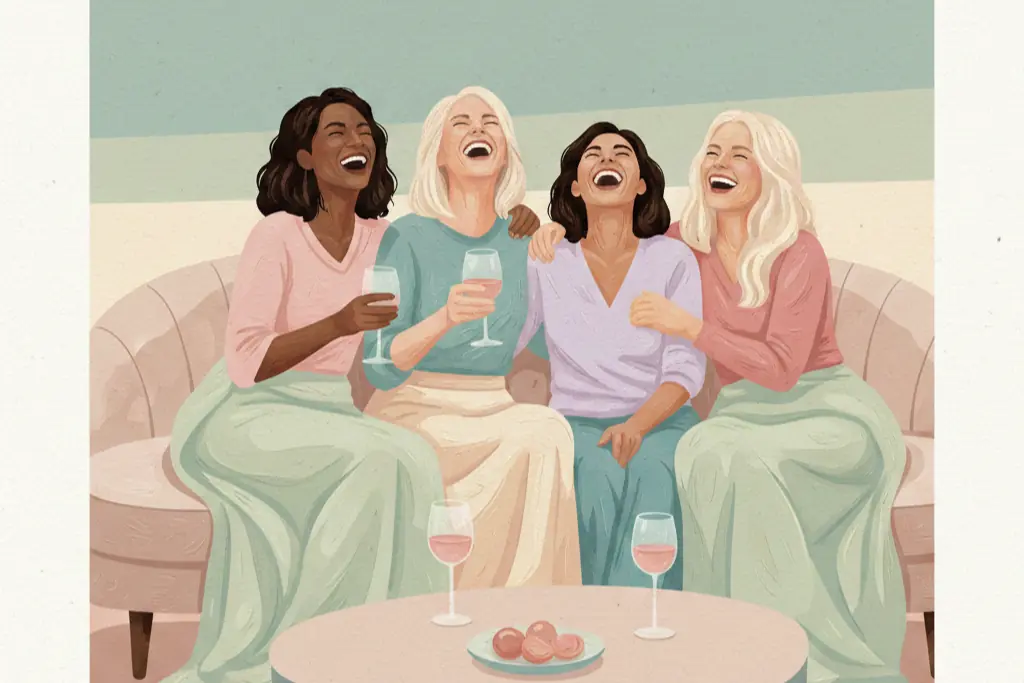
She also demonstrates the 6's capacity for genuine loyalty and sustained friendship. In a world where professional relationships are transactional, her actual friendships with her Friends cast-mates, with filmmaking collaborators, with the people in her life, represent a real commitment that isn't strategic. Type 6s take loyalty seriously, and when they commit to someone, that commitment lasts.
The Type 6 Energy in Your Life
If you're a Type 6 yourself, Aniston's example teaches you something important: your reliability, your steadiness, your capacity to outlast difficulty — these are genuinely valuable. The world needs people who show up, who deliver, who don't fall apart under pressure. But the shadow side worth examining is whether you've let your need to be stable become a way of disappearing your own needs. Can you receive care the way you give it? Can you admit struggle the way you offer support? Can you be the vulnerable one sometimes? Aniston's later work and interviews suggest that asking these questions actually strengthens the 6's stability, not weakens it.
If you're not a Type 6, Aniston offers a window into a particular kind of power: the power that comes not from flashiness but from genuine presence and reliability over time. When a Type 6 commits to you, when a Type 6 chooses to stay, when a Type 6 stands beside you through difficulty — that's a form of love and loyalty that other types sometimes can't quite offer in the same way.
Curious about your own type?
Take the free Enneagram personality test and get your full profile in minutes.
Discover Your Type →